






Review of Quantitative Proteomics Classification Methods: The Transition from Qualitative to Quantitative
Proteomics is the scientific field that studies the complete set of proteins within a biological organism, focusing on their composition, structure, and function. In proteomics research, classification is one of the essential tools for understanding the proteome. With continuous technological advancements, proteomics has gradually evolved from qualitative to quantitative. This article will provide a detailed introduction to the principles, techniques, and applications of quantitative proteomics classification methods, aiming to offer readers a comprehensive understanding of these methods.
1. Qualitative Proteomics Classification Methods
Qualitative proteomics classification methods aim to describe the characteristics and composition of the proteome. Common methods include protein identification, functional annotation, and pathway analysis. Through qualitative analysis, we can understand the types of proteins, their subcellular localization, and the biological processes they participate in, thereby revealing the functions of proteins within an organism. Traditional qualitative methods primarily rely on immunodetection and mass spectrometry techniques to identify and characterize proteins, inferring their functions and properties.
2. Quantitative Proteomics Classification Methods
Quantitative proteomics classification methods aim to measure the abundance of proteins in different samples and compare the expression differences between them. With continuous technological advancements, the shift from qualitative to quantitative proteomics classification methods has become possible. Common quantitative methods include mass spectrometry quantification, immunodetection, and gene expression analysis. These methods can study differences and similarities between different samples by measuring protein expression levels. The development of quantitative proteomics classification methods provides us with more accurate and comprehensive proteome information, aiding in a deeper understanding of protein functions and regulatory mechanisms.
3. Advantages and Disadvantages of Quantitative Proteomics Classification Methods
Different quantitative proteomics classification methods have their own advantages and disadvantages. Mass spectrometry quantification can provide high-throughput and comprehensive protein quantification, but it is challenging for the analysis of complex samples. Immunodetection methods have high sensitivity and specificity but require pre-existing antibodies and standards, and are limited by detection range and depth. Gene expression analysis methods can provide the correlation between genes and proteins but can only indirectly infer protein expression levels, affected by post-transcriptional modifications. Choosing the appropriate quantitative method is crucial, considering the research objectives and sample characteristics.
4. Applications of Quantitative Proteomics Classification Methods
Quantitative proteomics classification methods have broad applications in biomedical research and drug development. They can be used for the discovery of disease biomarkers, identification of drug targets, and evaluation of drug efficacy. By accurately measuring and comparing protein abundance in different samples, potential biomarkers can be identified, enhancing the understanding of disease mechanisms and assessing the impact of drugs on the proteome. Quantitative proteomics classification methods provide more comprehensive and accurate information for biomedical research, aiding in the acceleration of new drug development and the realization of personalized medicine.
Quantitative proteomics classification methods represent a transition from qualitative to quantitative approaches, providing a more comprehensive and accurate understanding of the characteristics and functions of the proteome through the measurement of protein abundance and expression differences. Different quantitative methods have their own advantages and disadvantages, and appropriate methods should be chosen based on research objectives and sample characteristics. Quantitative proteomics classification methods hold promising applications in biomedical research and drug development.
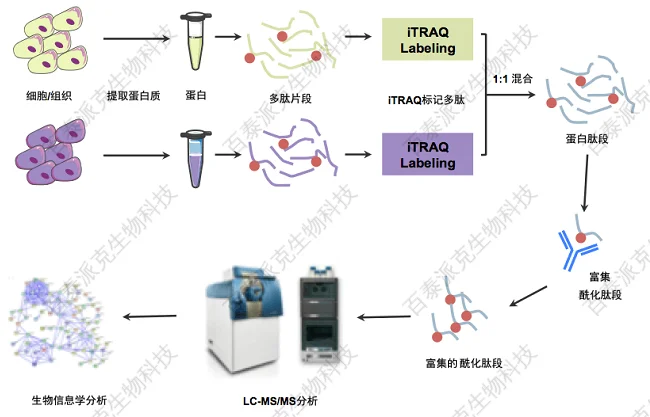
Figure 1
Biotech Company - BiotechnologyProductsCharacterization, High-Quality Multi-Omics Mass Spectrometry Detection Service Provider
Related Services:
Acetylation Quantitative Proteomics Research
Post-Translational Modification Proteomic Analysis
Histone Post-Translational Modification Analysis
Acetylation Quantitative Proteomics Research
Quantitative Proteome Analysis
Targeted Proteomics
4D Proteomics
DIA Quantitative Proteomics
Label-Free Quantitative Proteome Analysis
Label-Based Protein Quantification Techniques - iTRAQ, TMT, SILAC
MRM/PRM Quantitative Proteomics Analysis
How to order?




