






Analysis of Phosphorylation Sites in Drug Development and Screening: Value and Challenges
Protein phosphorylation is a crucial intracellular signaling mechanism that regulates protein function and activity through enzymes. Phosphorylation site analysis is a key method for studying phosphorylation events and has garnered significant attention in drug development and screening in recent years. This article will focus on the value and challenges of protein phosphorylation site analysis in drug development and screening.
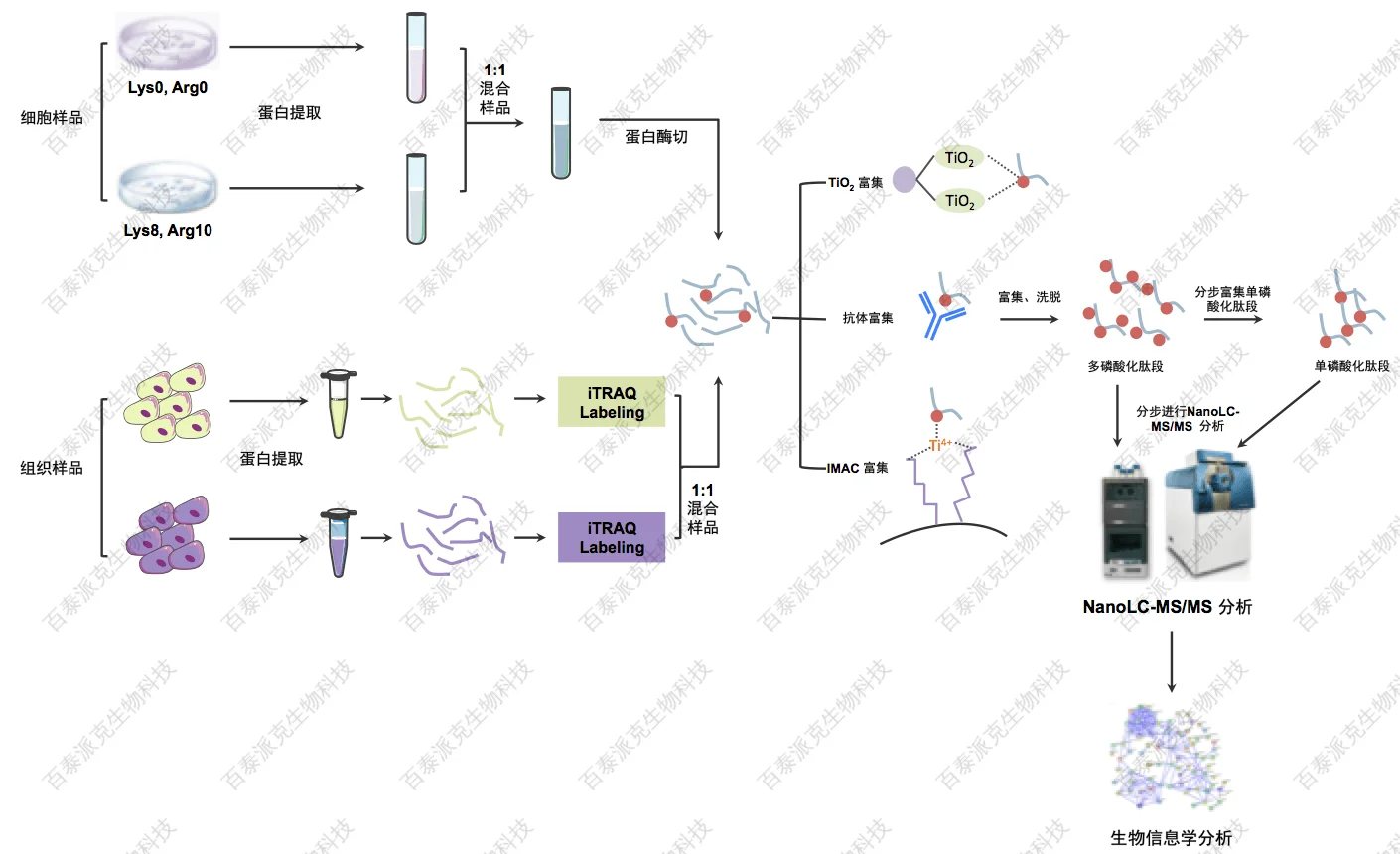
Figure 1
1.Mechanism of Phosphorylation:
As a common post-translational modification, protein phosphorylation regulates numerous biological processes within cells, including cell proliferation, apoptosis, and differentiation. Phosphorylation alters protein conformation and interactions, thereby regulating the activation or inhibition of signaling pathways. Accurate identification and quantitative analysis of phosphorylation sites are essential for understanding the regulatory mechanisms of protein function.
2.Development and Application of Phosphorylation Site Analysis Techniques:
With advancements in biotechnology, techniques for phosphorylation site analysis have greatly improved. Mass spectrometry, antibody detection, and phosphopeptide enrichment techniques play crucial roles in phosphorylation site analysis. Mass spectrometry, as an efficient and high-throughput technique, allows direct quantification and localization identification of phosphorylation sites. Antibody detection can specifically recognize phosphorylation sites to monitor the phosphorylation levels of specific proteins. Phosphopeptide enrichment techniques effectively enhance the detection sensitivity of low-abundance phosphorylated peptides in samples. These technical developments provide powerful tools for phosphorylation site analysis, accelerating research progress.
3.Application Cases of Protein Phosphorylation Sites in Drug Development:
Protein phosphorylation site analysis exhibits vast application prospects in drug development and screening. By analyzing phosphorylation sites in signaling pathways, new drug targets can be discovered, providing critical information for target screening in drug development. For example, comprehensive analysis of phosphorylation sites can reveal abnormal phosphorylation sites in certain disease states, uncovering new therapeutic targets. Additionally, phosphorylation site analysis can be used to evaluate drug efficacy, helping researchers understand the effects of drugs on specific signaling pathways.
4.Challenges in Protein Phosphorylation Site Analysis:
Despite the considerable potential of protein phosphorylation site analysis in drug development, several challenges remain. Firstly, the identification and quantitative analysis techniques for phosphorylation sites still have limitations, particularly in detecting low-abundance phosphorylation sites. Secondly, phosphorylation events in signaling pathways are often dynamic and complex, requiring a deep understanding of their spatiotemporal characteristics to better guide drug design and screening. Additionally, data processing and interpretation of phosphorylation site analysis present challenges, necessitating the development of more precise and efficient analytical methods.
Protein phosphorylation site analysis is a crucial tool in drug development and screening, showing tremendous value and potential. By understanding the mechanisms of phosphorylation, continuously improving analysis techniques, and fully exploring the application of phosphorylation sites in drug development, we can better leverage protein phosphorylation site analysis to support new drug discovery and screening. Despite current challenges, ongoing technological advancements and accumulated application experience promise an increasingly important role for protein phosphorylation site analysis in the field of drug development.
Biotech Co., Ltd. -- BiologicalProductsCharacterization, a high-quality service provider for mass spectrometry detection of multi-omics biological samples
Related Services:
Phosphorylation Quantitative Proteomics Research
Multi-pathway Phosphoproteomics
Post-translational Modification Proteomic Analysis
Histone Post-translational Modification Analysis
Quantitative Proteomic Analysis
Targeted Proteomics
4D Proteomics
DIA Quantitative Proteomics
Label-Free Based Quantitative Proteomic Analysis
Label-based Protein Quantification Techniques - iTRAQ, TMT, SILAC
MRM/PRM Quantitative Proteomics Analysis
How to order?




