






Application of Mass Spectrometry in Drug Discovery: From Target Identification to Optimization
Drug discovery is a complex and tedious process involving a large number of experiments and data analyses. In this process, proteins play a crucial role as drug targets. However, accurately identifying and characterizing proteins in drug development remains a challenging task. In this regard, the application of mass spectrometry provides a powerful tool for drug discovery.
1. Protein Mass Spectrometry Analysis
1.1 Protein Identification
Protein mass spectrometry analysis involves ionizing protein molecules and then performing mass analysis in a mass spectrometer to determine the sequence and composition of proteins. This analysis can be achieved through two main methods: mass spectrometry based on mass-to-charge ratio and mass spectrometry based on fragment ion mass. By comparing experimental data with databases, proteins present in the sample can be accurately identified.
1.2 Protein Quantification
In the process of drug discovery, understanding the expression levels of proteins is crucial for evaluating their importance as potential targets. Mass spectrometry can achieve this goal through quantitative protein analysis. Quantitative analysis methods include both labeled and label-free techniques. By comparing with internal standards or isotope labels, the relative or absolute expression levels of proteins can be accurately determined.
1.3 Protein Structural Characterization
Protein structural characterization is essential for understanding its function and how it interacts with drugs. Mass spectrometry can achieve structural characterization through in situ dissociation and fragmentation of proteins. By analyzing the mass spectra and the masses of dissociation fragments, the sequence, modifications, and binding sites with other molecules can be determined.
2. Application of Mass Spectrometry in Drug Discovery
2.1 Target Identification
Mass spectrometry plays an important role in target identification. By analyzing the mass spectra of proteins in samples, it can be determined which proteins are similar or related to those in known protein libraries. This helps to screen potential drug targets, thereby guiding subsequent drug design and optimization.
2.2 Drug Optimization
Mass spectrometry also plays a key role in drug optimization. Pharmacokinetic studies are an important means of evaluating the metabolic and excretion characteristics of a drug in the body. Mass spectrometry can determine metabolic pathways, the structure of metabolites, and their relative content by analyzing the mass spectra of drugs and their metabolites, thereby guiding the structural optimization of drug molecules and the optimization of pharmacokinetic parameters.
The application of mass spectrometry in drug discovery plays an important role from target identification to the optimization process. Through protein identification, quantification, structural characterization, and pharmacokinetic studies, mass spectrometry helps researchers better understand protein functions and interactions with drugs. This provides reliable experimental means for drug discovery and optimization, accelerating the process of new drug development.
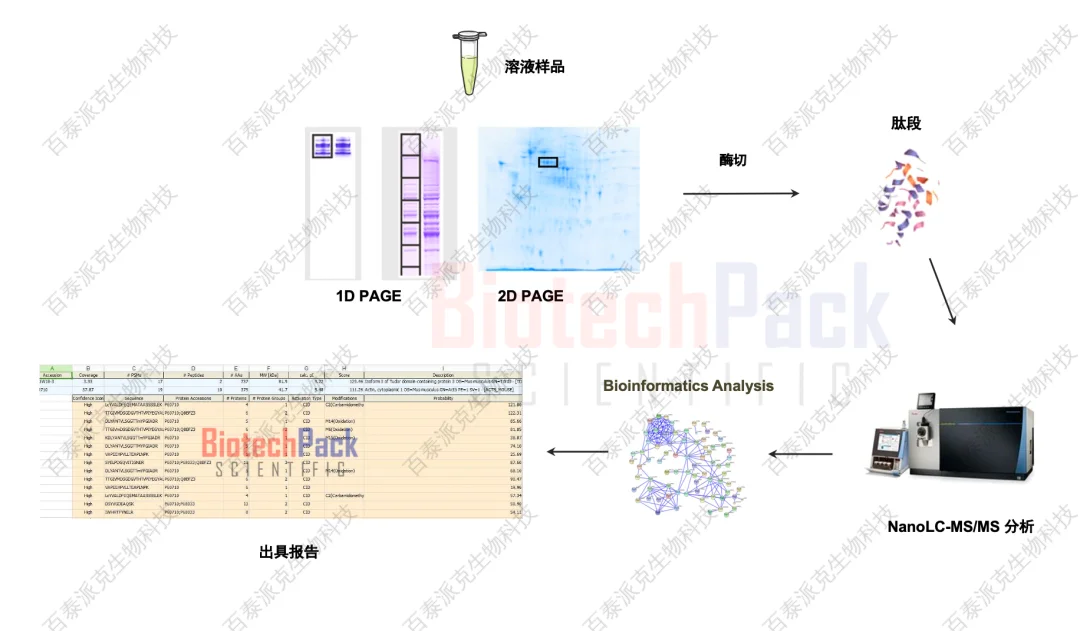
Figure 1
Biotech Peptide -- A leading provider of bioproduct characterization and multi-omics mass spectrometry services
Related Services:
Protein Mass Spectrometry Identification
Protein Molecular Weight Determination
Protein Identification from Gel Spots, Gel Strips, and IP Samples
Peptide Mass Spectrometry Identification
Shotgun Proteomics Identification
Membrane Protein Identification Service
Pull-down Target Protein Mass Spectrometry Identification
Protein Interaction Mass Spectrometry Analysis
Post-translational Modification Proteomics Analysis
Protein N/C-terminal Sequencing
Comprehensive Protein Mass Spectrometry Analysis
How to order?




