






Proteomics Validation Methods: How to Ensure the Accuracy and Reliability of Research Results?
Proteomics is the scientific field that studies the entire set of proteins within a biological organism, including their composition, structure, and function. In proteomics research, quantitative analysis is a crucial component that reveals differences in protein expression between various samples. However, to ensure the accuracy and reliability of research findings, proteomics requires verification methods to validate the credibility of quantitative results. This article will focus on the key aspects of proteomics verification methods.
I. Mass Spectrometry Quantification Methods
Mass spectrometry quantification is one of the common quantitative methods used in proteomics. It is based on measurements using mass spectrometry technology, which can accurately determine protein expression levels in different samples. In mass spectrometry quantification, relative quantification and absolute quantification are two commonly used methods.
1. Relative quantification methods can be used to compare protein expression differences between samples. Among them, isotope labeling is a common relative quantification method. Isotope labeling introduces isotopic labels of different masses into the samples, such as amino acid labeling and metabolic stable isotope labeling. By comparing the ratio of mass spectrometry peak intensities between labeled and unlabeled samples, the relative expression levels of proteins in different samples can be inferred.
2. Absolute quantification methods can accurately determine the absolute expression levels of proteins. Among them, the quantitative proteomics standard curve method and the quantitative proteomics marker method are commonly used absolute quantification methods. The quantitative proteomics standard curve method calculates the absolute expression levels of proteins by constructing a protein standard curve and relating the mass spectrometry peak intensities of test samples to the standard curve. The quantitative proteomics marker method involves adding a known concentration of labeled protein as an internal standard to the sample to determine the absolute expression levels of proteins.
II. Stable Isotope Labeling Techniques
Stable isotope labeling techniques are one of the important tools for mass spectrometry quantification. They achieve quantitative comparison between samples by binding proteins in the sample with labeled isotopes, helping to improve the accuracy and reliability of quantitative results.
1. Amino acid labeling is a common stable isotope labeling technique. In this method, the test samples and control samples are grown with amino acids labeled with isotopes of different masses. By comparing the relative intensities of mass spectrometry peaks of isotopically labeled proteins between the test and control samples, quantitative comparison results of proteins in different samples can be obtained.
2. Metabolic stable isotope labeling is another commonly used stable isotope labeling technique. In this method, test samples and control samples ingest metabolites labeled with isotopes of different masses during biological metabolism. By measuring the ratio of mass spectrometry peak intensities of specific metabolites in the samples, quantitative differences of proteins in different samples can be inferred.
III. Quantitative Proteomics Data Analysis
Quantitative proteomics data analysis is an indispensable step in proteomics research. It involves steps such as data filtering, identification and quantification of differential proteins, and statistical analysis.
1. Data filtering is used to remove noise and low-quality data, thereby improving the reliability of quantitative results. Common data filtering methods include peak intensity threshold screening and signal intensity filtering.
2. Identification and quantification of differential proteins can utilize tools such as database search, spectral library matching, and quantification software. Database search compares experimental proteomic mass spectrometry data with known protein sequences to identify protein identities. Spectral library matching compares experimental proteomic mass spectrometry data with established spectral libraries to determine protein identities and quantification results.
3. Statistical analysis methods such as t-test and partial least squares regression can help identify differential proteins and perform statistical significance analysis. These methods can assess whether the expression differences of differential proteins are significant and provide reliable quantitative results.
The application of proteomics verification methods is crucial for ensuring the accuracy and reliability of proteomics research results. Mass spectrometry quantification methods, stable isotope labeling techniques, and quantitative proteomics data analysis are important steps in proteomics verification. Through these methods, we can obtain reliable quantitative results, providing important evidence for biomedical research and biopharmaceutical development. In future research, continuous improvement and innovation of verification methods will further enhance the accuracy and reliability of proteomics research results.
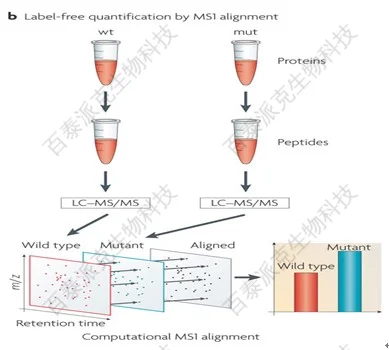
Figure 1
Biotech Co., Ltd. -- BiologicalProductsCharacterization, Multi-omics Biological Mass Spectrometry Testing High-Quality Service Provider
Related Services:
Absolute Quantification Analysis (AQUA)
Quantitative Proteome Analysis
Semi-Quantitative Proteomics Analysis
Post-Translational Modification Proteomics Analysis
Targeted Proteomics
4D Proteomics
MRM/PRM Quantitative Proteomics Analysis
Label-Free Quantitative Proteome Analysis
Label-Based Protein Quantification Techniques - iTRAQ, TMT, SILAC
TMT/iTRAQ/MultiNotch Quantitative Proteomics Analysis
DIA Quantitative Proteomics
SWATH Quantitative Proteomics Service
2D-DIGE Quantitative Proteomics
Proteomics Bioinformatics Analysis
How to order?




